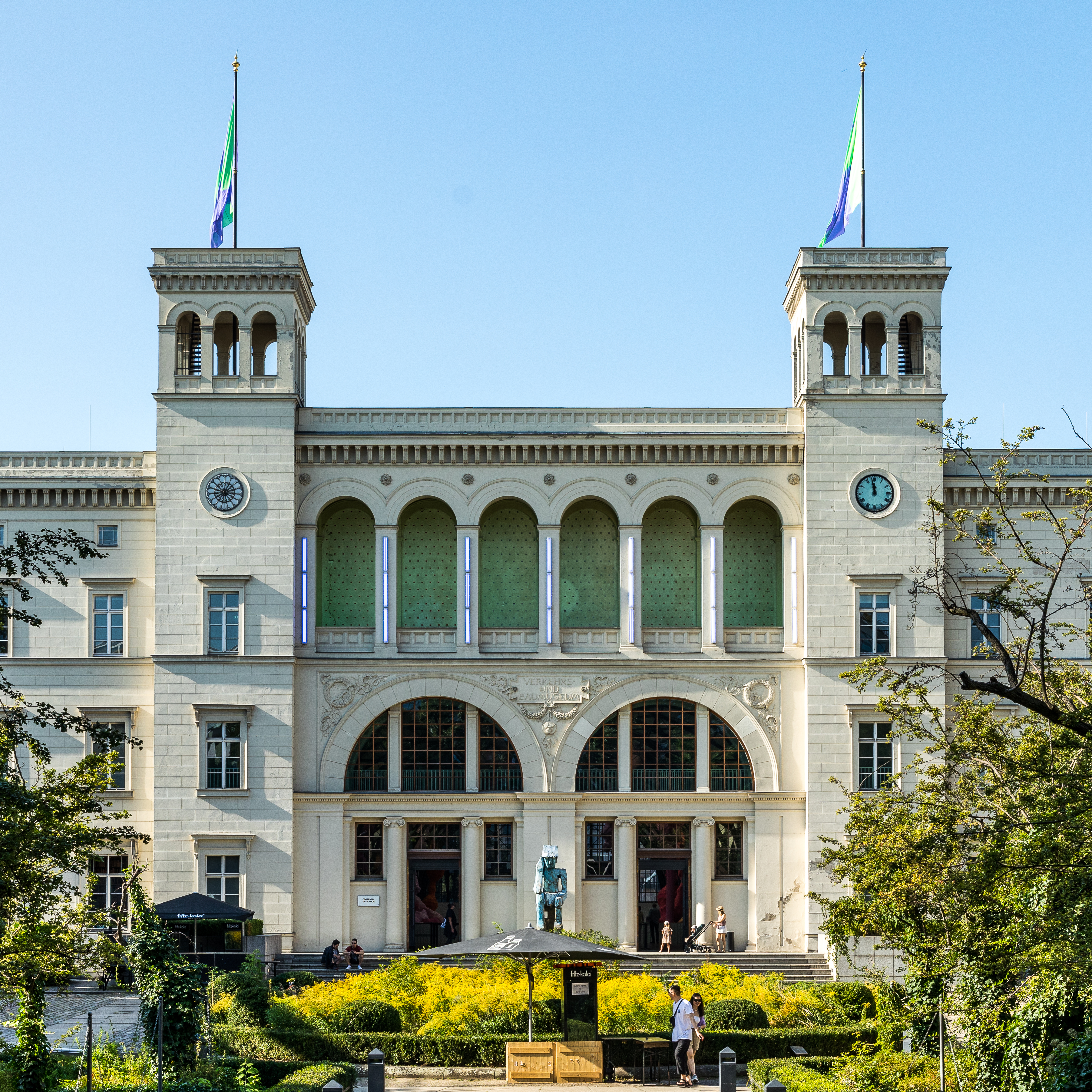
Hamburg Railway Station (Hamburger Bahnhof)
Europe,
Germany,
citta,
Moabit
The Hamburger Bahnhof in Berlin, located in the Moabit district, is an icon of contemporary art and a fundamental piece of the city’s cultural landscape. The museum takes its name from the railway station whose building it occupies, an imposing neoclassical structure built in 1847 to serve the Berlin-Hamburg line. This building, one of the oldest railway terminals still standing in Germany, was designed by the architect Friedrich Neuhaus.
The history of the Hamburger Bahnhof is rich and varied. After ceasing railway operations in 1884, the building was transformed into a transport museum in 1904. However, its fate changed radically after World War II, when it was severely damaged and subsequently left abandoned. It was only in the late 1980s that the station’s destiny changed again, when it was decided to transform it into a museum of contemporary art. The renovation and adaptation were entrusted to the architect Josef Paul Kleihues, and the museum was inaugurated in 1996.Today, the Hamburger Bahnhof is one of the venues of the Nationalgalerie in Berlin and houses one of the most important collections of contemporary art in the world. The permanent collection includes works by internationally renowned artists such as Andy Warhol, Joseph Beuys, Anselm Kiefer, and many others. The presence of these works not only testifies to the museum’s importance in the global art scene, but also makes it a reference point for contemporary art enthusiasts.One of the most emblematic pieces in the collection is “Das Kapital Raum 1970–1977” by Joseph Beuys, a monumental installation that occupies an entire room in the museum. Beuys, one of the most influential figures in 20th-century art, is known for his conceptual works and performances, which often explore themes of politics, economics, and society. The installation at the Hamburger Bahnhof is one of his most ambitious works and offers a profound reflection on the role of capital in modern society.The museum also hosts a wide range of temporary exhibitions that explore various aspects of contemporary art, from installation to video art, from painting to sculpture. These exhibitions not only highlight new talents, but also offer new interpretations of works from the permanent collection. This dynamic and innovative approach makes the Hamburger Bahnhof an institution in constant evolution, capable of attracting visitors from around the world.In addition to exhibitions, the Hamburger Bahnhof is also a place for research and education. The museum collaborates with numerous academic and cultural institutions, offering educational programs and workshops for students, artists, and the general public. These programs aim to promote understanding and appreciation of contemporary art, stimulating debate and critical reflection.An interesting anecdote related to the Hamburger Bahnhof concerns the acquisition of the Erich Marx collection, a German art collector who donated a significant part of his private collection to the museum. This donation allowed the museum to significantly expand its collection and establish itself as one of the leading institutions of contemporary art in Europe. The Marx collection includes works by artists such as Roy Lichtenstein, Cy Twombly, and Robert Rauschenberg, who have helped define 20th-century art. The location of the Hamburger Bahnhof, near Berlin’s central station, makes it easily accessible and places it in a vibrant and dynamic urban context. The proximity to the River Spree and the numerous parks in the area offers visitors the opportunity to combine a visit to the museum with a relaxing walk along the river or a visit to other museums and cultural attractions in the city.
Read More