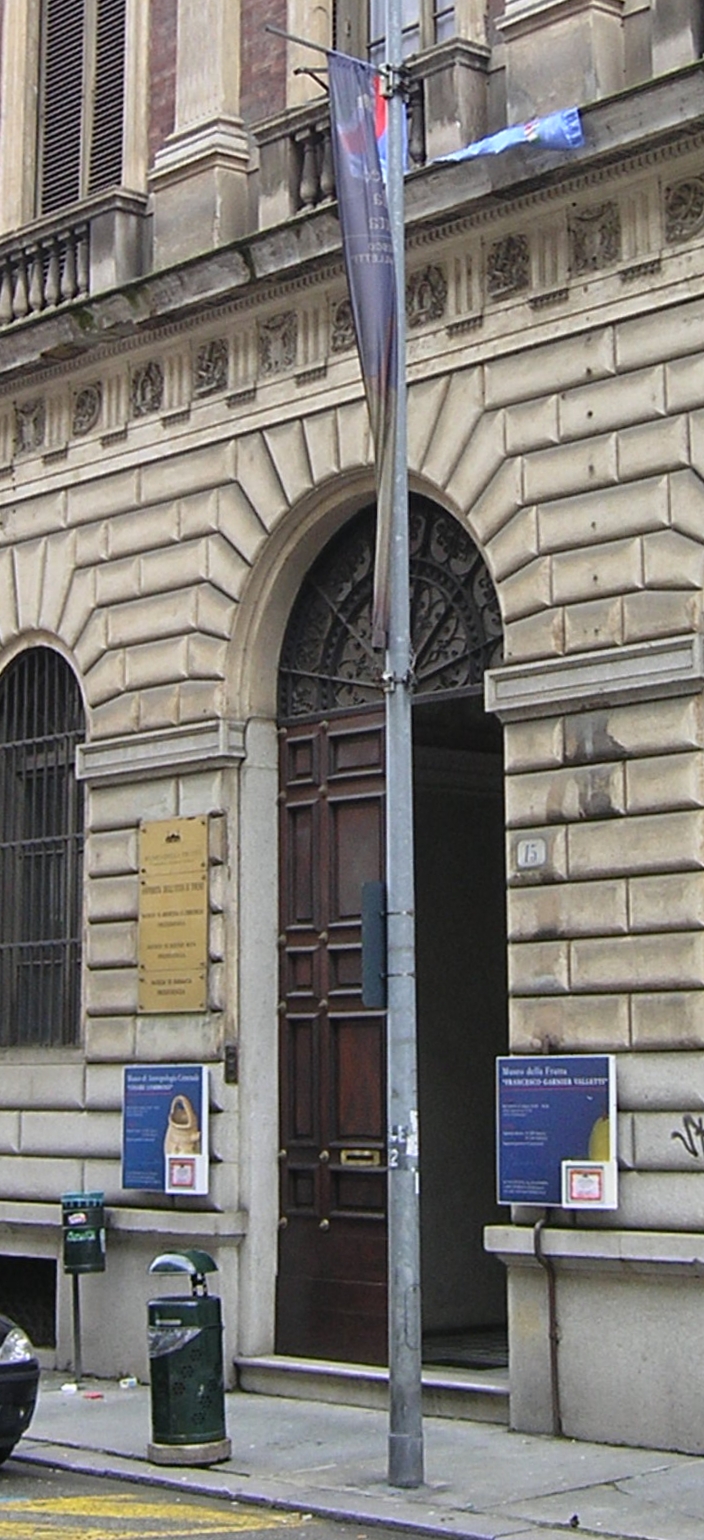
Lombroso Museum
Europe,
Italy,
citta,
San Salvario
The Cesare Lombroso Museum of Criminal Anthropology in Turin is one of the most controversial and fascinating institutions in Italy. Founded in 1876 by Cesare Lombroso himself, the museum houses a vast collection of artifacts related to Lombroso’s studies on criminal anthropology, a discipline that he himself helped create and develop. Lombroso, a physician and anthropologist, is known for his theories on the innate criminality of certain individuals, theories that had a significant impact in the field of criminology and psychiatry in the 19th century, but are now widely refuted and criticized.
The museum is located in the Palazzo degli Istituti Anatomici and is part of the museum system of the University of Turin. The collection was opened to the public in 1898 and includes objects collected by Lombroso during his career. Among the exhibited artifacts are human skulls and brains, death masks, crime scene bodies, and artifacts made by prisoners and individuals with mental disorders. One of the most well-known and debated elements of the collection is the skeleton of Giuseppe Villella, an alleged brigand whose skull had an occipital dimple that Lombroso interpreted as a sign of criminal atavism.
The museum’s exhibition is divided into nine thematic rooms that trace Lombroso’s main research. A significant area of the museum is dedicated to the tools used by Lombroso for his anthropometric measurements, such as calipers and cranial measurers. In another room, visitors can see Lombroso’s private study, reconstructed with original furniture and period documents. Here, an imaginary narrating voice of Lombroso guides visitors through his theories and discoveries, providing a historical and scientific context.
Despite the educational and historical intent of the museum, the figure of Cesare Lombroso and his theories have sparked numerous controversies over the years. His ideas about biological predisposition to criminality, based on physical and morphological characteristics, have been criticized for their determinism and racist implications. In particular, southern Italian communities have protested against Lombroso’s negative portrayal of southerners, often considered more prone to criminality according to his theories.
These protests have led to calls for the museum’s closure and the return of the exhibited human remains, considered by many as an offense to the dignity of the individuals represented. For example, the municipality of Motta Santa Lucia has requested the return of Giuseppe Villella’s skull, seen as a symbol of the oppression and discrimination suffered by southerners. After a long legal battle, in 2019 the Court of Cassation confirmed the legitimacy of displaying Villella’s remains in the museum, recognizing the historical and scientific interest of the collection.
Despite these controversies, the Lombroso Museum continues to attract numerous visitors, both for its historical and scientific interest and for curiosity about Lombroso’s theories. Every year, thousands of people visit the museum to learn more about an important and controversial chapter in the history of criminology and anthropology.
The museum’s exhibition path is enriched with informative panels and videos that explain the historical context of Lombroso’s theories and their impact on society at the time. These educational tools help visitors understand how Lombroso’s theories have been surpassed by modern criminology, which recognizes the importance of social, environmental, and psychological factors in criminal behavior.
The Lombroso Museum is therefore a place for reflection on the past and scientific progress. It invites visitors to question the limits of science and the importance of a critical and aware approach to research. Lombroso’s theories, although outdated, offer a starting point for understanding how science can evolve and improve, acknowledging its own mistakes and limitations.
Read More