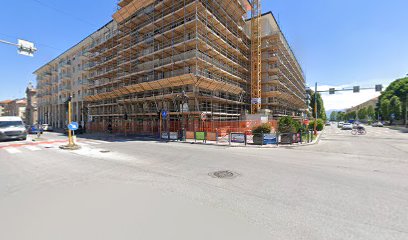
Nizza Avenue – Cuneo
Europe,
Italy,
Cuneo,
Welcome to Cuneo, a city that knows how to blend the beauty of its history with contemporary dynamism. Today we find ourselves on Corso Nizza, an important avenue that winds through the heart of Cuneo, known for its elegant arcades and numerous commercial activities. This street, a symbol of vitality and sociability, is a reference point for both residents and tourists. Built in the mid-1800s, Corso Nizza represents an example of urban development that has profoundly marked the identity of the city. The arcades, typical of Cuneo’s architecture, provide shelter and conviviality, transforming the avenue into a place for meeting and shopping. Corso Nizza has a history that traces back to the period of urban transformation in the 19th century. In the 1850s, the city of Cuneo began to modernize and equip itself with new infrastructure to meet the growing needs of the population. The construction of Corso Nizza took place between 1852 and 1856, as part of the major public works aimed at improving urban mobility. The avenue was designed to connect the city center to the main access roads, thus facilitating trade and communication with the outside. The choice of the name “Nizza” is a clear allusion to the historical and cultural ties with Liguria and the French city, which in turn recalls a time when Cuneo and its province were part of a broader context influenced by the French presence. Over the years, Corso Nizza has undergone various transformations. The arcades, a distinctive feature of the street, were built to provide shelter for pedestrians and to promote commercial activity, and have been subject to various restorations and preservations over time. The most significant restoration efforts took place in the 20th century when there was an effort to preserve historical architecture while also addressing the new commercial and social needs of the city. Today, Corso Nizza is not just a thoroughfare; it has become the beating heart of social life in Cuneo, with a series of events and activities that make this street a privileged place to experience the city. Here, markets, cultural events, and local festivals take place, making each visit unique and memorable. As soon as we arrive at the beginning of Corso Nizza, to our right, we admire the elegant architecture of the arcades that line the street. These arcades feature neoclassical-style columns, which lend an air of nobility and history. Continuing along the avenue, the arcades alternate with shops and cafes, creating a lively and welcoming atmosphere. As we proceed, on our left, we notice numerous historic buildings that overlook the avenue. Many of these structures date back to the 19th century and feature facades decorated with stuccos and architectural details that tell the story of Cuneo. Among these buildings, Palazzo G. Dalmazzo stands out as a perfect example of civil architecture of the time, with a beautiful wrought iron balcony. Advancing along our path, we arrive at one of the focal points of the avenue: Piazza della Repubblica. From here, other streets branch off towards the historic center. This space is often animated by markets and recreational activities, serving as a fundamental gathering place for the community. As we continue, we can notice an interesting detail: along the avenue, many of the arcades host elegant cafes and restaurants, offering the chance to sit and enjoy local specialties. This is a great way to immerse oneself in Cuneo’s culinary culture and appreciate the local gastronomic tradition, famous for dishes like vitello tonnato and tajarin. Continuing our walk on Corso Nizza, we encounter various shops that offer everything from local crafts to high fashion. It’s interesting to note how commerce here has adapted to the times while maintaining a strong and distinctive identity. The presence of historic shops alongside modern brand stores reflects a fusion of tradition and innovation. Finally, as we approach the end of the avenue, we cannot overlook the stunning view of the Alps that looms in the background. This breathtaking view, visible from various points along the avenue, is one of the most fascinating features of Cuneo. It is a reminder of the natural beauty of the region, which perfectly blends with the historical and modern architecture of the city center. Corso Nizza fits into a much broader context that includes several other attractions and points of interest. Just a few steps from the avenue, we find the historic Piazza Galimberti, a lively meeting place famous for its weekly market. Not far away, there is also the Civic Museum of Cuneo, a true treasure trove of local history and art. Here, it is possible to delve into the works of art that tell the story of the city and its evolution over time, from the medieval period to the present day. Finally, the Church of San Francesco is worth a visit; it is a beautiful example of Gothic architecture located nearby. The church is known for its frescoes and the contemplative atmosphere it conveys, providing an interesting contrast to the commercial vibrancy of Corso Nizza. An interesting curiosity about Corso Nizza is its popularity as a location for many local events and manifestations. Every year, the avenue transforms into a true stage, hosting musical festivals, craft markets, and food fairs that attract visitors from all over the region. Moreover, the avenue is also famous for its historic palazzos, many of which belong to noble Cuneo families. This gives Corso Nizza an aura of prestige and a deep connection to the city’s aristocratic history. Finally, it’s interesting to note how Corso Nizza has maintained a strong local identity despite the influence of big brands. This is a clear sign that, even in an era of globalization, the Cuneo community has managed to preserve its culture and traditions. We invite you to take the time to discover and explore the other places we have mentioned, like Piazza Galimberti, the Civic Museum, and the Church of San Francesco, for a complete and immersive experience of Cuneo’s history and culture. Enjoy your visit!
Read More