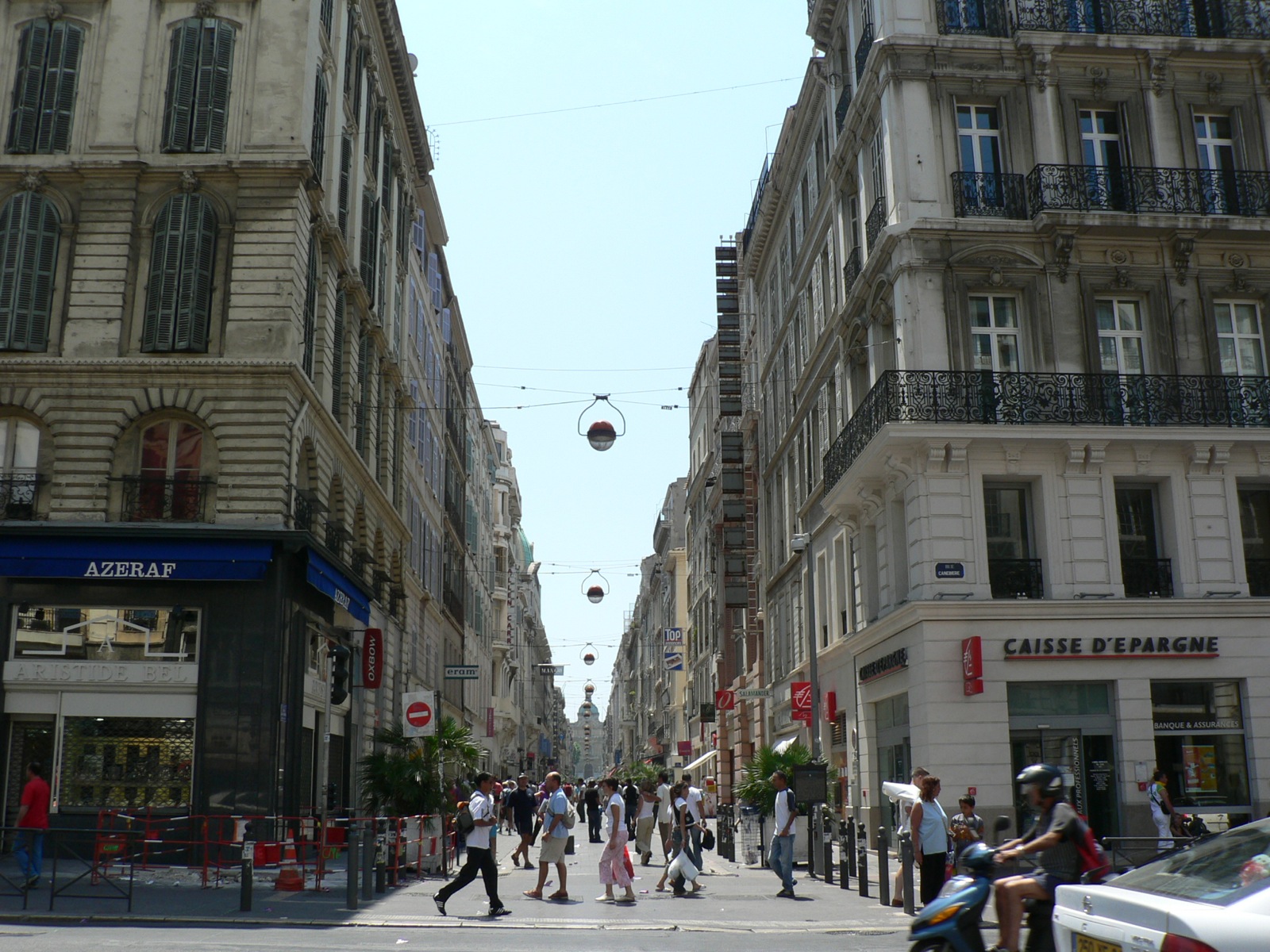
Rue Saint-Ferréol
Europe,
France,
Marseille,
Noailles
Rue Saint-Ferréol is one of the liveliest and busiest shopping streets in Marseille, a place where modernity and history blend to create a unique and dynamic atmosphere. Located in the heart of the city, this pedestrian street stretches for about a kilometer, connecting the Canebière, Marseille’s main artery, to Place Félix Baret. With its trendy shops, restaurants, cafes, and theaters, Rue Saint-Ferréol is a reference point for shopping and social life in the city.
The history of Rue Saint-Ferréol dates back to the 19th century, when Marseille was experiencing economic and demographic growth. The street is named after Saint Ferréol, a Christian martyr from the 3rd century, whose cult was particularly revered in Provence. Originally, the street was a link between the port and the residential areas of the city, but over time it has transformed into one of Marseille’s main shopping centers.The architecture of Rue Saint-Ferréol reflects the different historical periods the city has gone through. The buildings along the street range from the Haussmann style of the 19th century, with their elegant facades and wrought iron balconies, to more modern constructions housing large chain stores and luxury boutiques. This architectural variety creates a fascinating contrast that makes a stroll along Rue Saint-Ferréol a visually stimulating experience.One of the most characteristic aspects of Rue Saint-Ferréol is its lively atmosphere. The street is pedestrianized, making it an ideal place for walking and shopping without the disturbance of car traffic. During the day, the street is bustling with residents and tourists stopping to shop, have a coffee at one of the many outdoor bars, or simply enjoy the lively atmosphere of the city. In the evening, restaurants and cafes fill up with people looking for a place to relax and socialize. Rue Saint-Ferréol is one of the liveliest and busiest shopping streets in Marseille, a place where modernity and history blend to create a unique and dynamic atmosphere. Located in the heart of the city, this pedestrian street stretches for about a kilometer, connecting the Canebière, Marseille’s main artery, to Place Félix Baret. With its trendy shops, restaurants, cafes, and theaters, Rue Saint-Ferréol is a reference point for shopping and social life in the city.The history of Rue Saint-Ferréol dates back to the 19th century, when Marseille was experiencing economic and demographic growth. The street is named after Saint Ferréol, a Christian martyr from the 3rd century, whose cult was particularly revered in Provence. Originally, the street was a link between the port and the residential areas of the city, but over time it has transformed into one of Marseille’s main shopping centers.The architecture of Rue Saint-Ferréol reflects the different historical periods the city has gone through. The buildings along the street range from the Haussmann style of the 19th century, with their elegant facades and wrought iron balconies, to more modern constructions housing large chain stores and luxury boutiques. This architectural variety creates a fascinating contrast that makes a stroll along Rue Saint-Ferréol a visually stimulating experience.One of the most characteristic aspects of Rue Saint-Ferréol is its lively atmosphere. The street is pedestrianized, making it an ideal place for walking and shopping without the disturbance of car traffic. During the day, the street is bustling with residents and tourists stopping to shop, have a coffee at one of the many outdoor bars, or simply enjoy the lively atmosphere of the city. In the evening, restaurants and cafes fill up with people looking for a place to relax and socialize. An interesting anecdote concerns the commercial evolution of Rue Saint-Ferréol. In the 1980s and 1990s, the street underwent a significant transformation with the opening of department stores and international chains, which attracted an increasing number of visitors and contributed to its reputation as Marseille’s main shopping street. This change also led to an increase in property prices and gentrification of the area, transforming the social and commercial fabric of the street.
Read More