The Canebière
Europe,
France,
Marseille,
Noailles
The Canebière is the most famous and iconic avenue in Marseille, a thoroughfare that stretches for about a kilometer from the Vieux-Port to the Réformés district. This boulevard represents the beating heart of the city, a living testimony of its tumultuous history and continuous rebirth. The name “Canebière” comes from the Provençal word “canebe”, which means hemp, a reference to the trade of this fiber that was flourishing in the area during the Middle Ages.
The Canebière was inaugurated in 1666, during the reign of Louis XIV, as part of an urban expansion plan desired by the minister Colbert. The goal was to modernize Marseille and transform it into a city worthy of its status as the most important port in France. Originally, the avenue was a narrow and muddy street, but over time it transformed into an elegant boulevard, lined with imposing buildings and luxury shops.
During the 18th and 19th centuries, the Canebière became the center of social and commercial life in Marseille. Cafés, theaters, and high-fashion shops flourished along the avenue, attracting the elite of Marseille society. One of the most representative buildings of this period is the Opéra de Marseille, inaugurated in 1787, which still hosts opera and ballet performances today. The Canebière also became an important banking center, with numerous banks and insurance companies opening their headquarters along the avenue.
The history of the Canebière is also marked by tragic events. During World War II, Marseille suffered heavy bombings and the Canebière was not spared. Many historic buildings were destroyed or severely damaged. However, the avenue managed to rise from its ashes, thanks to an ambitious reconstruction program that aimed to preserve its historical heritage while modernizing its infrastructure.
One of the most fascinating anecdotes about the Canebière is related to the famous expression “Ça ne vaut pas une Canebière” (It’s not worth a Canebière), used to indicate something of great value. This popular saying emphasizes how prestigious and central the avenue was considered in the life of Marseille. Today, the Canebière still retains this charm, with its vibrant and cosmopolitan atmosphere that reflects the soul of the city.
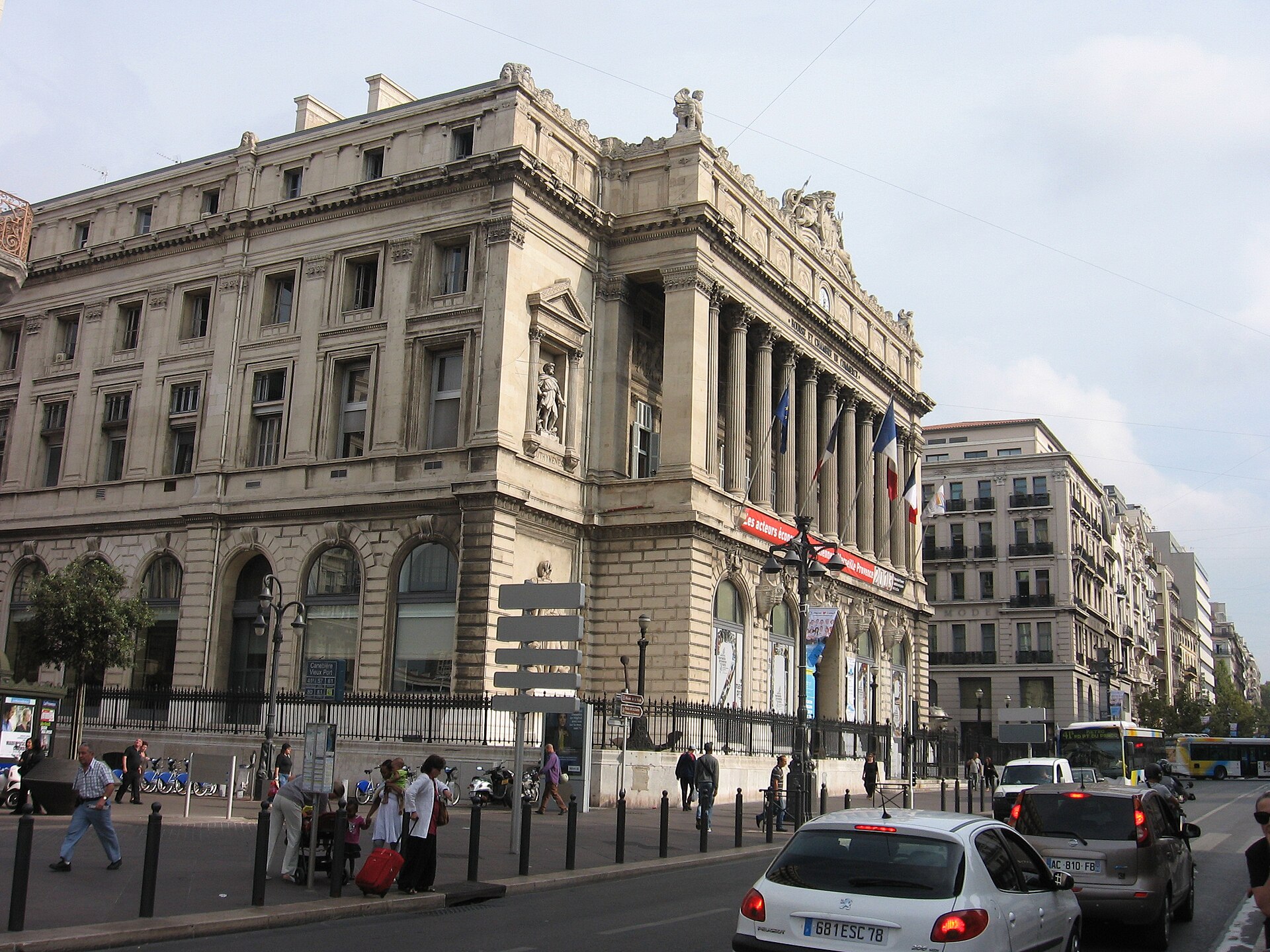
In recent decades, the Canebière has undergone a process of urban redevelopment that has sought to restore its former splendor. Pedestrianization projects and infrastructure improvements have made the avenue more accessible and attractive to residents and tourists. The presence of numerous restaurants, cafes, and boutiques gives the Canebière an air of elegance and liveliness. Another point of interest along the Canebière is the Palais de la Bourse, an imposing neoclassical building that houses the Marseille Chamber of Commerce. Built in 1860, the palace is a symbol of the city’s economic prosperity during the 19th century. Inside, you can admire magnificent decorated rooms and a museum that tells the commercial history of Marseille.
The Canebière is also a place of historical memory, with numerous monuments and plaques commemorating significant events and figures. Among these, the statue of Pierre Puget, one of the greatest French baroque sculptors, located in a garden near the Vieux-Port. Additionally, along the avenue there are several historic churches, such as the Église des Réformés, which add a touch of spirituality to the urban landscape.
Read More