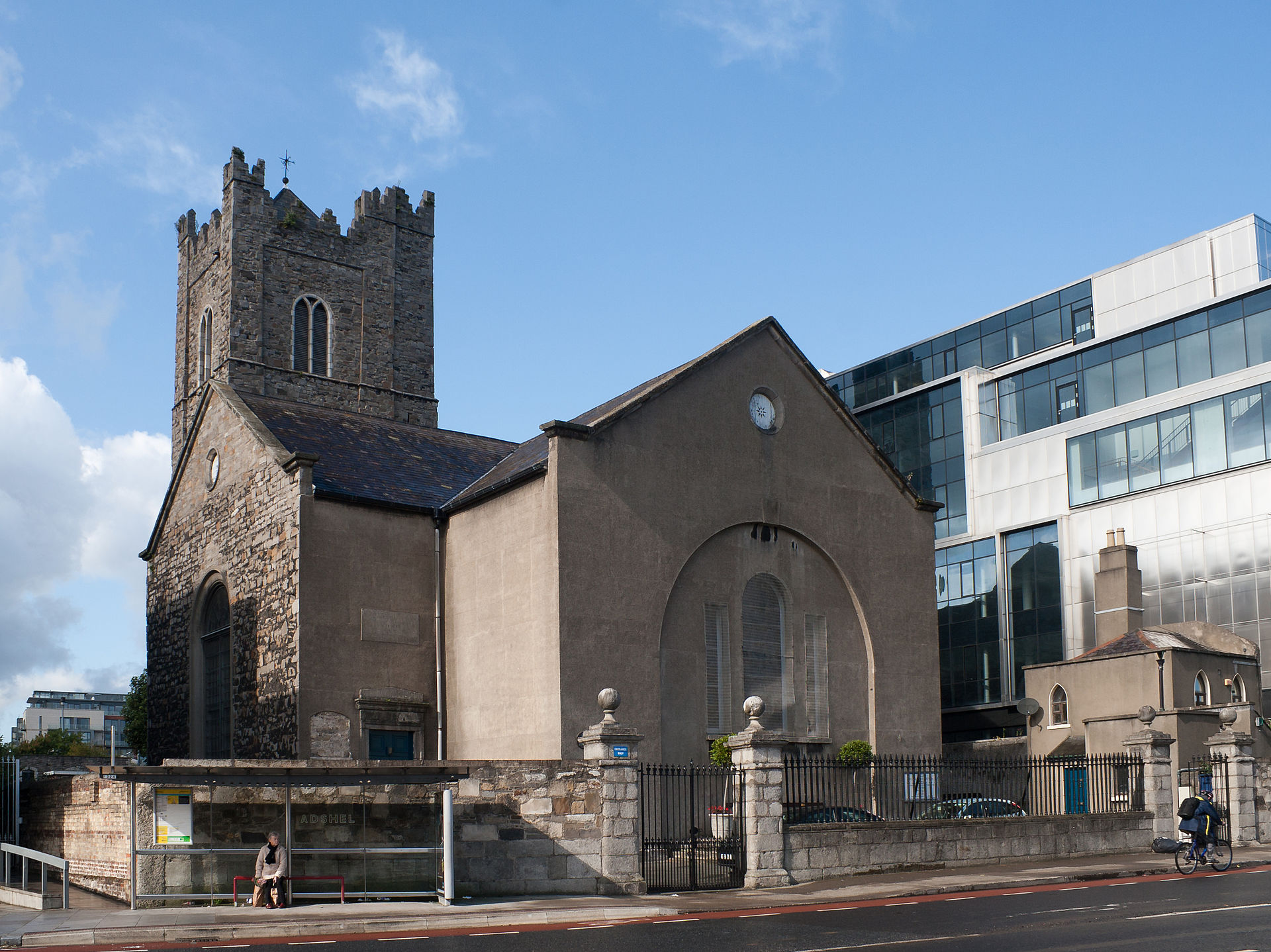
St. Michan Church
Europe,
Ireland,
citta,
Smithfield
In the heart of the Smithfield district in Dublin stands St. Michan’s Church, a place of worship rich in history and mystery that has its roots in the Middle Ages. Originally founded in 1095, this Anglican church has undergone numerous transformations over the centuries, becoming not only a spiritual landmark but also a site of great historical and archaeological interest.
The current structure of St. Michan’s Church dates back to 1686, following a significant reconstruction that nevertheless preserved its ancient character. The exterior of the building is austere and simple, with gray stone walls that reflect the solemnity and durability typical of medieval churches. Inside, however, the church reveals a sober beauty with a vaulted wooden ceiling said to resemble the interior of an overturned ship, a detail that adds a touch of architectural uniqueness.One of the most fascinating elements of St. Michan’s Church is its crypt. This crypt, accessible via a narrow staircase, is famous for its natural mummies. The particular atmospheric conditions inside the crypts, with cold and dry air, have contributed to the preservation of the bodies, some of which date back more than 400 years. Among the most famous mummies are that of a crusader, said to have fought in the Crusades, and that of a man with a severed hand, likely a thief severely punished for his crimes.The mummies of St. Michan have inspired numerous legends and popular stories. It is said that the famous writer Bram Stoker, author of “Dracula,” visited the crypt as a child and that this experience influenced his gothic imagination. The crypt is a place that captures the imagination of anyone who visits, offering a haunting yet fascinating glimpse into the past.From a historical perspective, St. Michan’s Church has played an important role in the life of the Dublin community. During the Middle Ages and in the centuries that followed, the church was a central hub for the religious and social life of the neighborhood. With the advent of the Protestant Reformation, St. Michan became an Anglican church, continuing to serve the community with devotion.Artistically, the church houses some notable works, including a historic organ that, according to legend, was played by George Frideric Handel during his visit to Dublin. This organ, still functional, represents a precious piece of the city’s musical heritage and is used for concerts and religious services.An interesting anecdote concerns one of the mummies in the crypt. It is said that in the 19th century, some American tourists visiting Dublin decided to take the finger of one of the mummies as a macabre souvenir. Fortunately, the finger was returned shortly afterward, and the episode helped to consolidate the mysterious and sinister fame of St. Michan’s crypts.
Read More