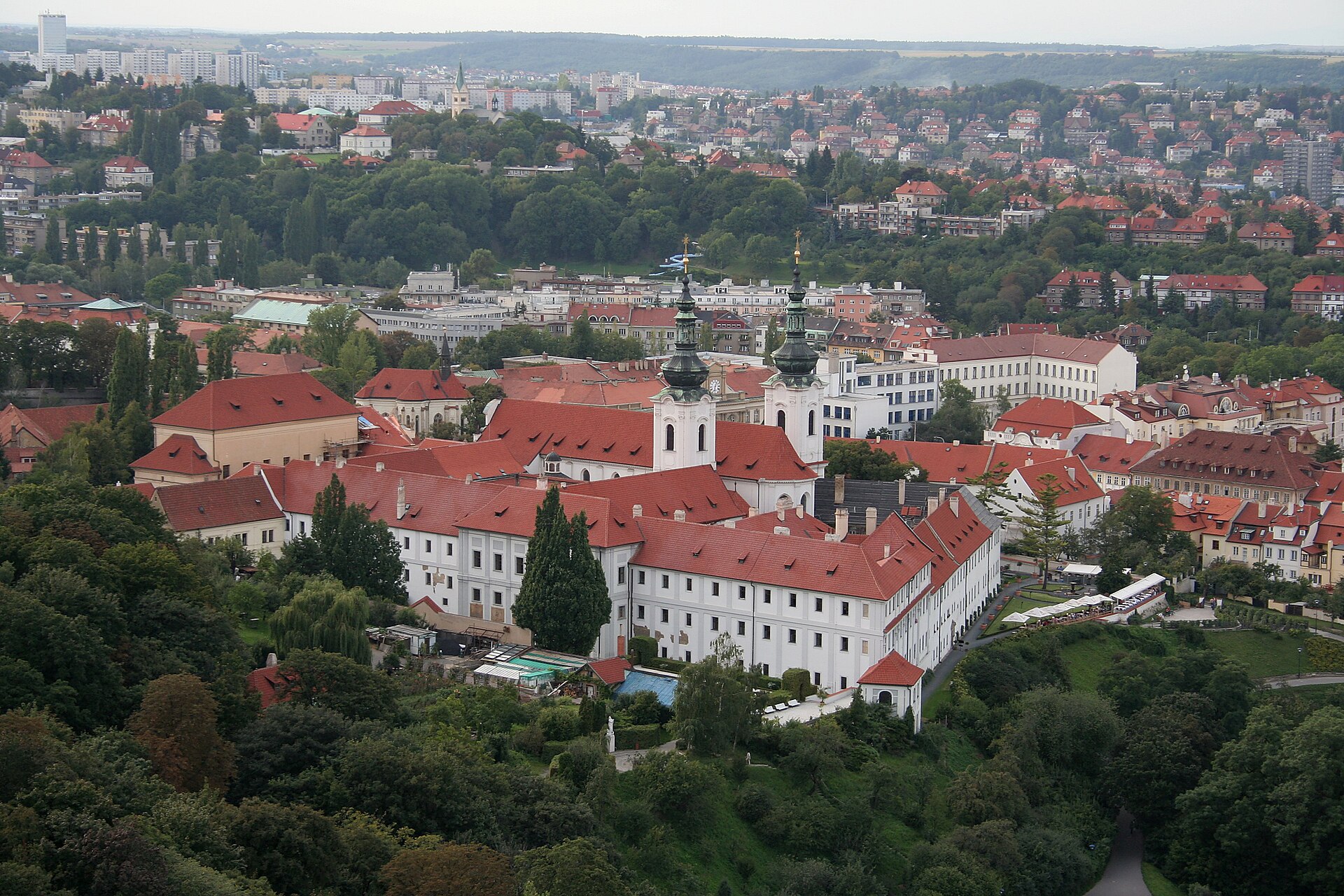
Strahov Monastery
Europe,
Czech Republic,
Prague,
Strahov
The Strahov Monastery, located on a hill overlooking the Malá Strana district in Prague, is one of the oldest and most prestigious monastic complexes in the Czech Republic. Founded in 1143 by the Premonstratensians, an order of regular canons of St. Norbert, the monastery played a crucial role in the spiritual and cultural life of the city for almost nine centuries.
The name “Strahov” comes from the Czech term “strahovat”, which means “to watch” or “to observe”, a reference to the strategic position of the monastery, from which you can enjoy a panoramic view of Prague. The monastic complex consists of a series of historic buildings, including the Basilica of the Assumption of the Virgin Mary, the famous Strahov Library, and a number of richly decorated halls and chapels.
The Basilica of the Assumption of the Virgin Mary, the spiritual heart of the monastery, is an extraordinary example of Baroque architecture, the result of renovations in the 17th and 18th centuries. The church is adorned with frescoes, sculptures, and altars that reflect the wealth and devotion of the monks over the centuries. During the Baroque period, the monastery flourished under the guidance of visionary abbots who commissioned works of art and valuable architecture.
The Strahov Library is perhaps the most famous element of the monastery. Divided into two large halls, the Theological Hall and the Philosophical Hall, the library houses one of the most important collections of manuscripts and ancient books in Europe. The Theological Hall, built in the 17th century, is famous for its ceiling frescoes depicting themes of divine knowledge and wisdom. The Philosophical Hall, completed in the 18th century, boasts an extraordinary vault frescoed by Franz Anton Maulbertsch, celebrating the progress of science and philosophy.
An interesting anecdote concerns the monastery’s collection of curiosities, known as the Cabinet of Curiosities. This assortment of strange and wonderful objects, including fossils, shells, scientific instruments, and exotic artifacts, reflects the monks’ desire to understand and document the natural world in all its diversity. These objects are displayed in special showcases in the library, eliciting wonder from visitors.
The Strahov Monastery has experienced periods of great prosperity but also moments of crisis. During the Hussite Wars of the 15th century, the complex was looted and largely destroyed. It was only in the 17th century, with the return of peace and under the protection of the Habsburgs, that the monastery was rebuilt and restored to its former glory. In the 20th century, the monastery was once again threatened during the Nazi occupation and communist regime, but it managed to survive thanks to the dedication of the monks and the local community.
Read More