Curia Julia
Europe,
Italy,
citta,
Rione X - Campitelli
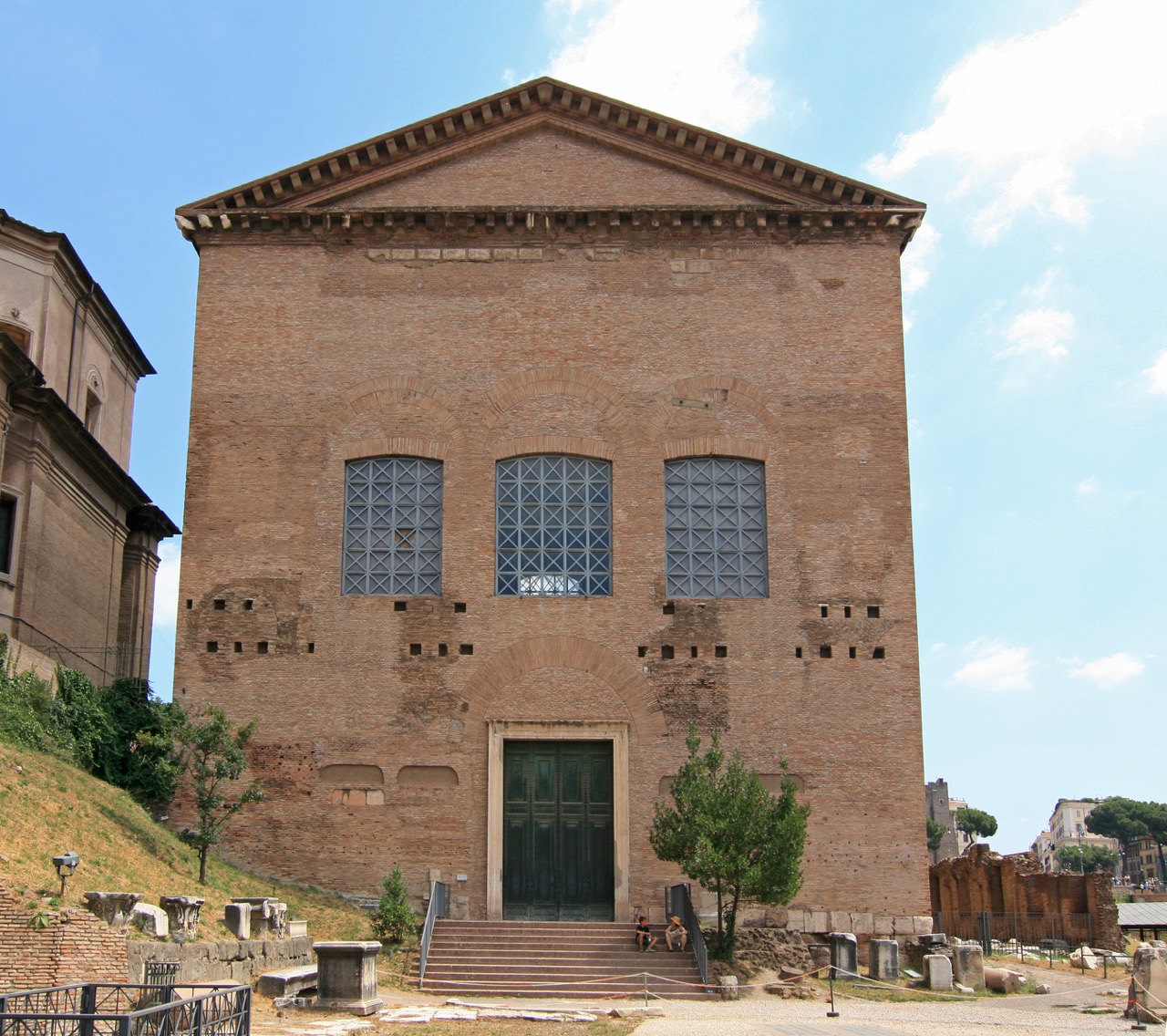
The Curia Julia, located in the heart of the Roman Forum, is one of the best-preserved structures of ancient Rome and represents an important example of Roman architecture and politics. This historic building, built to host meetings of the Roman Senate, has undergone centuries of transformations and restorations, maintaining its symbolic and historical importance intact.
The construction of the Curia Julia began in 44 BC at the behest of Julius Caesar, who intended to replace the previous Curia Cornelia, which was built on the original Curia Hostilia, attributed to King Tullus Hostilius. The new curia was part of an ambitious project to reorganize the Roman Forum. However, Caesar never saw his project completed, as he was assassinated shortly after the start of the works. It was his successor, Octavian Augustus, who completed the construction and inaugurated the building in 29 BC.The original building, damaged by a fire in 283 AD, was restored by Emperor Diocletian between 284 and 305 AD. The structure we can admire today mainly dates back to this restoration. The fact that the Curia Julia has reached us in such good condition is due to its conversion into a church in the 7th century AD, when Pope Honorius I transformed it into the church of Sant’Adriano al Foro. This continued use as a place of worship has helped preserve the structure through the centuries, protecting it from destruction and abandonment.The architecture of the Curia Julia is an example of sober monumentality. The building is made of bricks and covered with stucco to imitate marble, with a large entrance portal flanked by columns and surmounted by a triangular pediment. The outer walls were decorated with marble slabs at the bottom, while the upper part had a stucco covering simulating marble blocks. The roof of the building was covered with terracotta tiles, and three large windows on the upper part of the facade allowed light to illuminate the interior.The interior of the Curia consisted of a large rectangular hall, about 25 meters long and 18 meters wide, with a series of steps on both sides that served as seats for the senators. The original floor was made of polychrome marble, with geometric patterns creating an extraordinary visual effect. At the center of the hall was an altar dedicated to the goddess Victoria, where senators made sacrifices before meetings. This altar emphasized the importance of the cult of Victory in Roman politics, a symbol of the success and divine protection of the State.During the Republican era, the Curia was the center of Roman political life, where laws governing the empire were discussed and voted on. Senators, dressed in the characteristic toga praetexta with a purple stripe, gathered here to debate crucial issues regarding domestic and foreign policy. With the advent of the Empire, the power of the Senate significantly diminished, becoming mostly an advisory body that ratified the decisions of the emperor. However, senatorial meetings remained important events, with senators continuing to play a ceremonial and administrative role.An interesting anecdote concerns the emperor Elagabalus, who had a portrait of himself hung while performing a sacrifice to the god El-Gabal in the Curia, causing outrage among the senators who did not tolerate his self-celebration. The portrait was removed after his death, highlighting the tensions between the emperor and the Senate.Over time, the Curia underwent further transformations. In the 17th century, the large bronze doors were removed to adorn the Basilica of St. John Lateran. During the fascist regime, the church of Sant’Adriano was dismantled and the building was restored to its original Roman form, on the occasion of the celebrations for the bimillennial of the birth of Augustus in 1938.
Read More