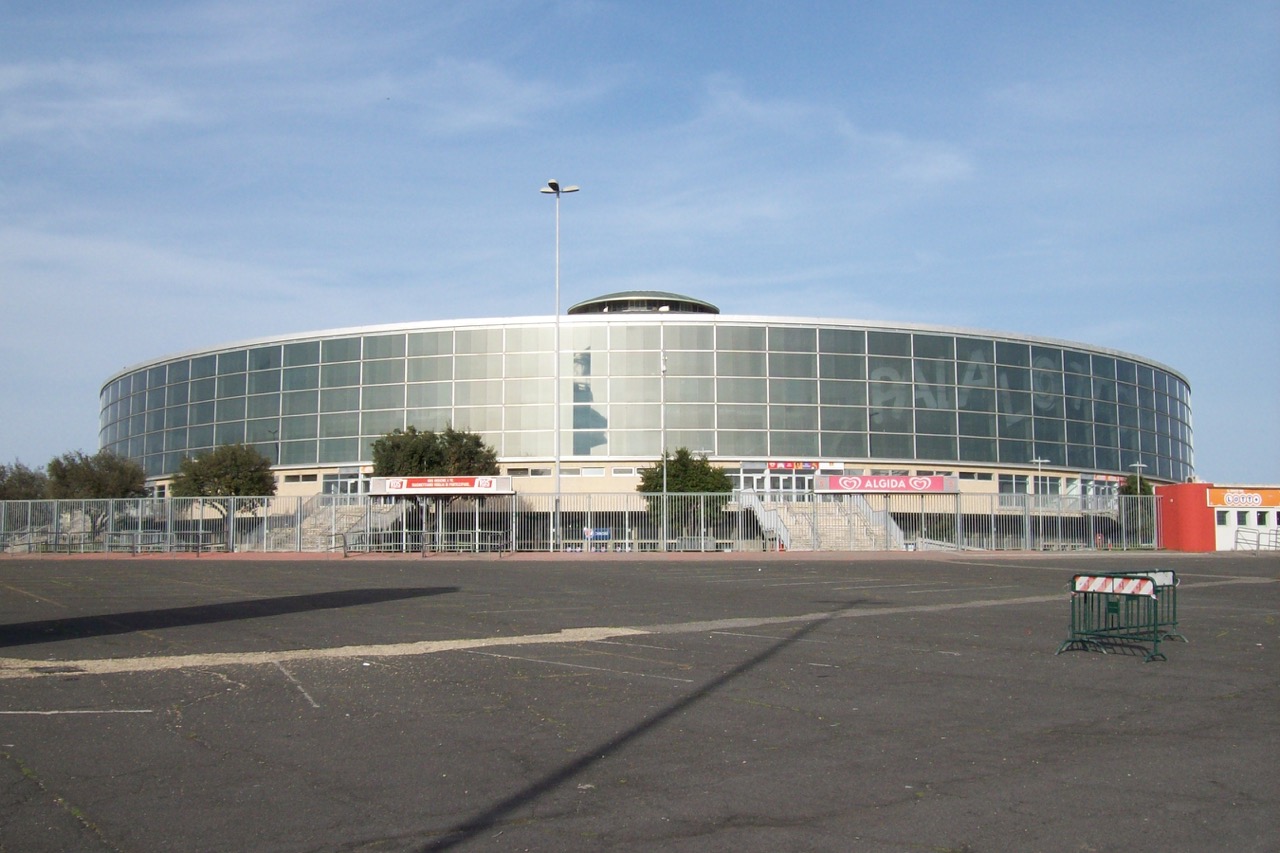
PalaLottomatica
Europe,
Italy,
citta,
EUR
The Palazzo dello Sport in Rome, also known as PalaEur, is one of the most iconic structures in the Italian capital, located in the EUR district. This multifunctional building was designed in 1956 by the architect Marcello Piacentini, with the structural consultancy of the renowned engineer Pier Luigi Nervi. The construction took place between 1958 and 1960, in preparation for the 1960 Rome Olympics, for which the structure was one of the main venues. The palace was inaugurated on June 3, 1960 and, since its completion, has hosted a wide range of sports, musical, and cultural events.
The design of the Palazzo dello Sport is a perfect example of Nervi’s innovative engineering. The structure is characterized by a circular shape, with a diameter of about 95 meters, and features a spherical dome roof made of reinforced concrete, only 9 centimeters thick. This design not only gives the building an extraordinary visual lightness, but also ensures exceptional structural resistance. The internal stands are supported by inclined pillars that also serve as a connection to the roof, creating a visually striking effect.The aesthetics of the building are further enhanced by the continuous glass facade, which masks the curved layout of the stands and the inclination of the supporting pillars. This use of glass not only makes the building transparent and bright, but also creates a visual dialogue between the interior and exterior, integrating the palace into the surrounding urban context.In addition to its innovative structure, the Palazzo dello Sport is famous for its versatility. Since its inauguration, it has hosted high-level sports events, including the 1960 Olympic basketball and boxing competitions. In the following years, the structure has been the venue for numerous European and world championships in various sports disciplines, such as the 1991 European Basketball Championship and the 2010 Volleyball World Championship. The palace has also been the home of the Virtus Roma basketball team, which played its home games there for many years.Equally important is the musical vocation of PalaEur, which has hosted concerts by internationally renowned artists. From the first Rolling Stones concert in 1970, the palace has become a must-visit for many artists and bands, such as Depeche Mode, Iron Maiden, Metallica, and many others. The structure was designed to ensure good acoustics, making it ideal for large-scale musical performances.The renovation from 1999-2003 further modernized the Palazzo dello Sport, improving its acoustics and updating the facilities to comply with new safety regulations. This intervention, funded by the betting company Lottomatica, also led to the installation of new facilities, including bars, restaurants, and a panoramic terrace overlooking the EUR lake. Additionally, the architect Massimiliano Fuksas created an external artistic installation composed of fluorescent lamps representing the Lotto numbers, as a tribute to the palace’s sponsor.The palace, also known as PalaLottomatica during the sponsorship period, has continued to be a reference point for events of various kinds. In addition to sports and musical events, the structure has hosted important political and trade union congresses, confirming its centrality in the public and cultural life of Rome.A significant anecdote related to the Palazzo dello Sport concerns an incident that occurred in 1975, when a Lou Reed concert was canceled due to clashes between protesters and law enforcement, caused by disputes over ticket prices. This episode, although negative, highlights the role of the palace as a place of expression and social confrontation.
Read More