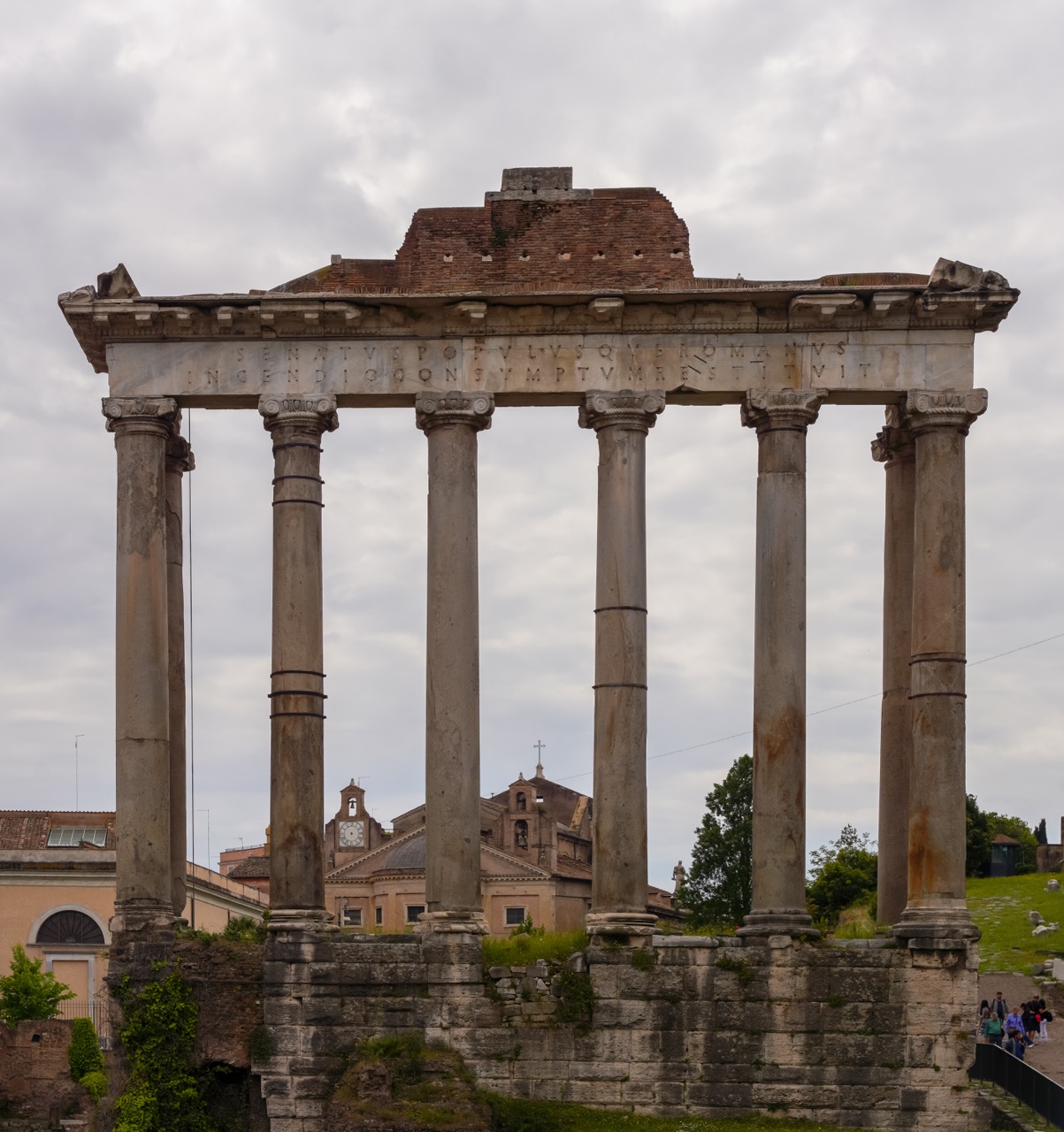
Temple of Saturn
Europe,
Italy,
citta,
Rione X - Campitelli
The Temple of Saturn, located in the Roman Forum, is one of the oldest and most revered places of worship in Rome. Its construction, dating back to the very early years of the Republic, took place in 497 BC, although sources are not unanimous on this date. Some scholars attribute the consecration of the temple to King Tarquin the Proud, while others argue that it was inaugurated by the consuls Aulus Sempronius Atratinus and Marcus Minucius Augurinus.
Located at the foot of the Capitoline Hill, the Temple of Saturn was dedicated to the god Saturn, associated with the Golden Age and prosperity. This connection with Saturn made the temple a central place for the celebrations of the Saturnalia, one of the most important and anticipated festivals in the Roman calendar, characterized by banquets, gift exchanges, and a temporary subversion of social order.The original structure of the temple underwent several reconstructions over the centuries. A significant first refurbishment took place in 42 BC by the consul Lucius Munatius Plancus, funded with the spoils of his triumph over the Alpine populations of the Reti. This reconstruction gave the temple the majestic appearance that we can admire today, with an imposing travertine podium and a frontal staircase leading to the cella.The current appearance of the temple is mainly due to the restorations carried out in the late 3rd century AD, after the fire of 283 AD under the emperor Carinus. From this period are the shafts of the columns in gray and pink granite and the four-faced Ionic capitals that characterize the temple’s facade. The entablature is made up of reused elements, with a frieze-architrave decorated with motifs from the late 2nd century BC, reworked to accommodate a new dedication inscription recalling the reconstruction after the fire.The function of the temple went beyond the religious one: its podium housed the aerarium, the state treasury of Rome, which was first placed there in the 4th century BC after the Gallic fire. The state archives and public insignia were also kept in the temple, emphasizing its central role in the political and administrative life of the city. Furthermore, the podium was used for the posting of laws and public documents, making the temple a reference point for Roman citizens.A fascinating detail of the temple was the statue of Saturn, located in the cella and representing the veiled god with a sickle in hand. This statue was hollow and filled with oil, with legs bound by woolen bands that were only untied during the Saturnalia, symbolizing the temporary liberation of social restrictions.During the Middle Ages, the cella of the temple remained intact and visible, but over the centuries the structure was buried and forgotten until the 19th century, when excavations of the Roman Forum once again brought its remains to light. The surviving columns and podium testify to the grandeur of the temple, which continues to dominate the landscape of the Forum, offering visitors a window into ancient Rome.
Read More