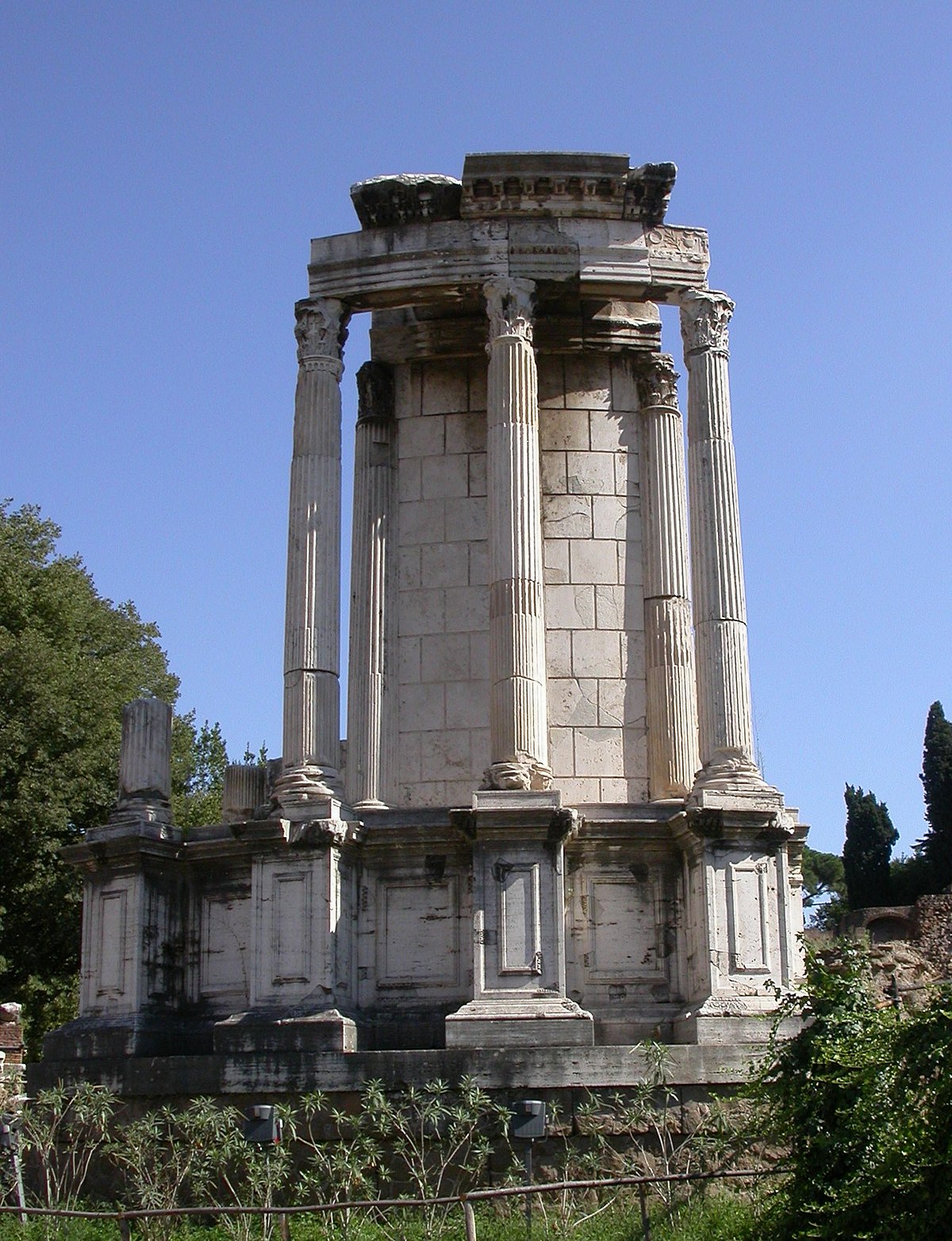
Temple of Vesta
Europe,
Italy,
citta,
Rione X - Campitelli
The Temple of Vesta, located in the Roman Forum, is one of the most iconic and fascinating symbols of ancient Rome. Dedicated to the goddess Vesta, deity of the domestic hearth and sacred fire, the temple played a central role in the religious and civil life of the city. Its origins date back to the 8th century BC, attributed to the legendary foundation by Numa Pompilius, the second king of Rome. Vesta was venerated as the guardian of the hearth and family, and her temple was the heart of Roman public worship.
The architecture of the Temple of Vesta is unique and easily recognizable. Unlike the classic rectangular Roman temples, the temple of Vesta has a circular plan, an innovation that reflects the ancient design of Italic huts and symbolizes the round hearth of primitive dwellings. The original conical roof, unfortunately no longer existing, covered the structure, and inside burned the eternal sacred fire of Vesta, a symbol of life and continuity of the city.The Corinthian columns of the temple, made of white marble, supported an entablature decorated with refined reliefs. These architectural details not only showcased the skill of Roman artisans, but also reflected the importance and sacredness of the place. The podium, still visible today, shows the circular plan and offers a glimpse into Roman construction techniques.A central element of the cult of Vesta was the presence of the Vestal Virgins, priestesses consecrated to the goddess, whose main mission was to keep the sacred fire burning. The Vestals were chosen from patrician families and served for a period of thirty years, during which they lived in the complex adjacent to the temple, the House of the Vestals. Their task was of utmost importance; extinguishing the fire was considered a bad omen for the city and severely punished.The temple itself was a place of extreme sacredness, so much so that no statues were kept inside, but rather the sacred fire and various cult objects. Access to the temple was strictly regulated, allowing entry only to the Vestals and the Pontifex Maximus, the head of the priestly college.The Temple of Vesta, like many other ancient monuments, underwent numerous restorations and reconstructions over the centuries. After being damaged by fires and earthquakes, it was restored in the imperial era, especially under Augustus, who recognized its symbolic importance. The temple continued to be an active place of worship until the end of the pagan era, when the sacred fire was finally extinguished by Emperor Theodosius I in 394 AD, during the Christianization of the empire.Today, the ruins of the Temple of Vesta are one of the most visited attractions in the Roman Forum. Although only part of the podium and some columns remain, the distinctive circular structure allows visitors to imagine the grandeur of the original temple. Its strategic location in the Forum, near the Regia and the House of the Vestals, emphasizes the central role it played in the public and religious life of Rome.
Read More